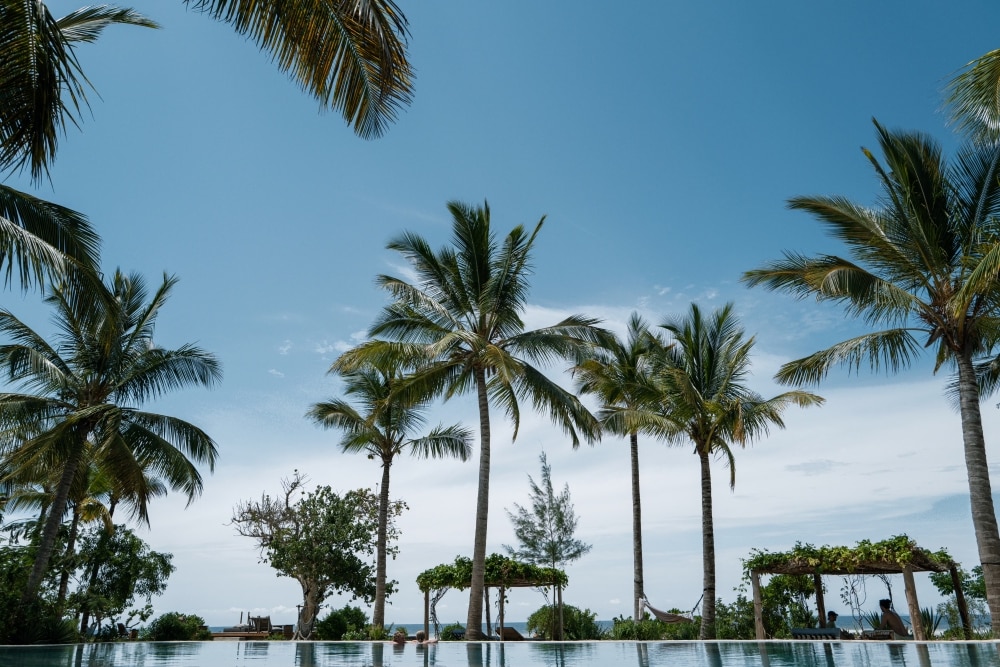


Hotell i Tegalrejo
 Ändra digBoka hotell med gratis avbokning
 Var kräsenSök bland nästan en miljon boenden i hela världen
Prova något nytt i Tegalrejo
Husdjur tillåtna
Lägenhet
Bubbelpool
Villa
Lägenhet
Familjevänligt
Resort
Äventyrsbad
Se priser för dessa datum
Ikväll
12 okt. - 13 okt.Imorgon
13 okt. - 14 okt.Till helgen
16 okt. - 18 okt.Nästa helg
23 okt. - 25 okt.Våra rekommendationer för hotell i Tegalrejo



1. Hotel Tentrem Yogyakarta
Hotel Tentrem YogyakartaYogyakarta
1 349 kr
inklusive skatter och avgifter
18 okt. – 19 okt.

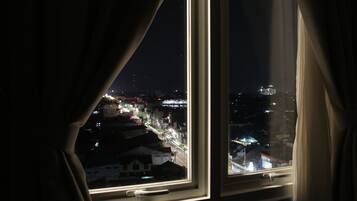


2. Uniq Hotel Yogyakarta
Uniq Hotel YogyakartaCentral Yogyakarta

Cem
218 kr
inklusive skatter och avgifter
14 okt. – 15 okt.


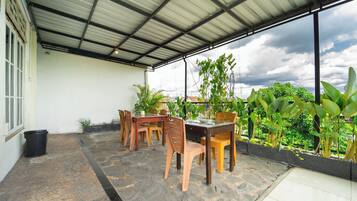

3. Peta Lodge Backpacker Hostel
Peta Lodge Backpacker HostelCentral Yogyakarta
95 kr
inklusive skatter och avgifter
13 okt. – 14 okt.

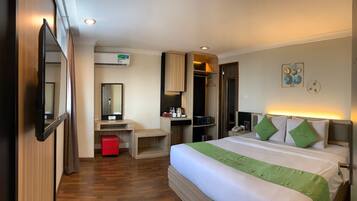


4. Top Malioboro Hotel
Top Malioboro HotelCentral Yogyakarta

Nishan
242 kr
inklusive skatter och avgifter
18 okt. – 19 okt.
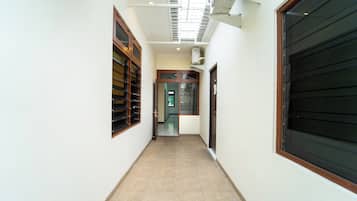


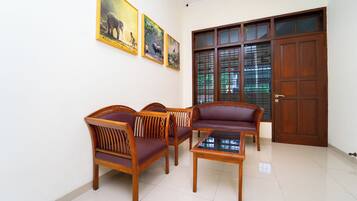
5. House Of Cokro By ARBA
House Of Cokro By ARBACentral Yogyakarta
101 kr
inklusive skatter och avgifter
14 okt. – 15 okt.


6. The Utara Hotel Tugu by Eresha Hospitality
The Utara Hotel Tugu by Eresha HospitalityCentral Yogyakarta
303 kr
inklusive skatter och avgifter
14 okt. – 15 okt.
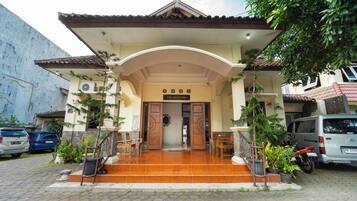
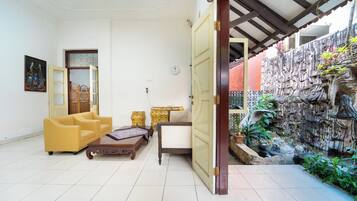
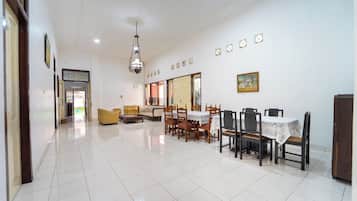
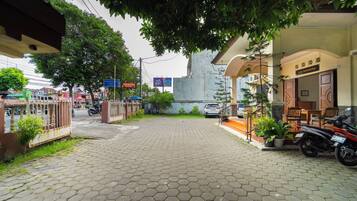
7. Griya Sastrowardoyo by ARBA
Griya Sastrowardoyo by ARBAYogyakarta
196 kr
inklusive skatter och avgifter
13 okt. – 14 okt.
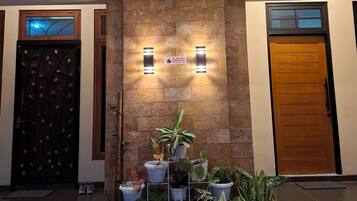
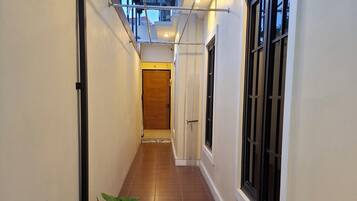

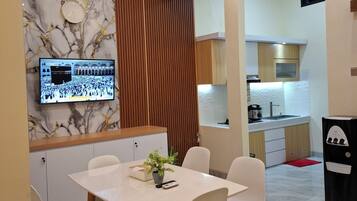
8. Tentrem Madani
Tentrem MadaniYogyakarta
1 006 kr
inklusive skatter och avgifter
13 okt. – 14 okt.


9. Allure Villa Yogyakarta
Allure Villa YogyakartaYogyakarta
680 kr
inklusive skatter och avgifter
14 okt. – 15 okt.


10. OYO 95050 Penginapan Sekarsari Syariah
OYO 95050 Penginapan Sekarsari SyariahYogyakarta
120 kr
inklusive skatter och avgifter
14 okt. – 15 okt.
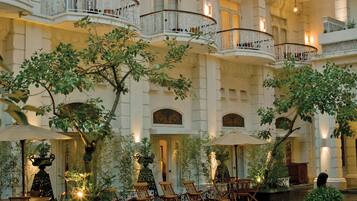



11. The Phoenix Hotel Yogyakarta - Handwritten Collection
The Phoenix Hotel Yogyakarta - Handwritten CollectionCentral Yogyakarta

Sara
743 kr
inklusive skatter och avgifter
14 okt. – 15 okt.

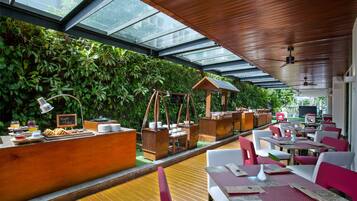


12. Swiss-Belboutique Yogyakarta
Swiss-Belboutique YogyakartaYogyakarta
Ulf
494 kr
inklusive skatter och avgifter
25 okt. – 26 okt.




13. Novotel Suites Yogyakarta Malioboro
Novotel Suites Yogyakarta MalioboroMalioboro
629 kr
inklusive skatter och avgifter
13 okt. – 14 okt.


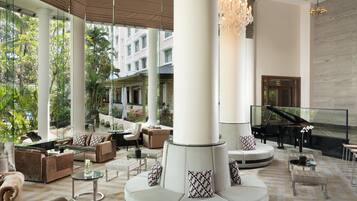

14. Melia Purosani Yogyakarta
Melia Purosani YogyakartaMalioboro
755 kr
inklusive skatter och avgifter
2 nov. – 3 nov.


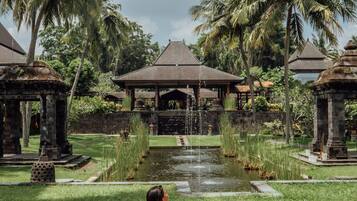

15. Hyatt Regency Yogyakarta
Hyatt Regency YogyakartaMlati
744 kr
inklusive skatter och avgifter
28 okt. – 29 okt.




16. Yogyakarta Marriott Hotel
Yogyakarta Marriott HotelDepok
1 184 kr
inklusive skatter och avgifter
2 nov. – 3 nov.




17. The Jogja Hotel & Conference Center - Malioboro
The Jogja Hotel & Conference Center - MalioboroCentral Yogyakarta

Hiroki
438 kr
inklusive skatter och avgifter
14 okt. – 15 okt.

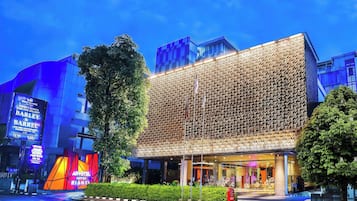


18. ARTOTEL Suites Bianti Yogyakarta
ARTOTEL Suites Bianti YogyakartaYogyakarta
617 kr
inklusive skatter och avgifter
19 okt. – 20 okt.




19. Grand Hotel De Djokja
Grand Hotel De DjokjaMalioboro

peter
1 014 kr
inklusive skatter och avgifter
18 okt. – 19 okt.



20. Gallery Prawirotaman Hotel
Gallery Prawirotaman HotelPrawirotaman
387 kr
inklusive skatter och avgifter
13 okt. – 14 okt.

Bo nära populära sevärdheter i Tegalrejo
Museum Sasana Wiratama
Se på utställningarna på Museum Sasana Wiratama - ett historiskt museum du hittar i Tegalrejo. I detta kulturella område får du inte missa att besöka butikerna.
Läs mer om Tegalrejo
Utforska romantiska Tegalrejo: spaanläggningar, kultur, barer och mycket mer!
Se alla hotell i Tegalrejo
Foto av Sharrie Shaw
Recensioner av topphotell i Tegalrejo
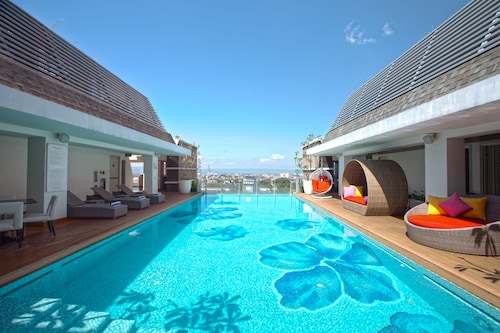
Swiss-Belboutique Yogyakarta
8/10 Bra
"Ett bra och fräscht hotell. Mycket bra gym. Städningen var bra men de kom oftast väldigt sent på dagen. Även frukosten varierade lite beroende på hur dags man kom dit. Ju tidigare desto bättre."

The Phoenix Hotel Yogyakarta - Handwritten Collection
8/10 Bra
"Fint historiskt hotel med utmärkt service. "
Billiga vistelser i Tegalrejo

The Pod Mangkubumi
no.95 Jl. Margo Utomo Yogyakarta DI Jogjakarta
78 kr
20 okt. – 21 okt.
inklusive skatter och avgifter

Cendhani Raras Gallery
Jl. Sidoasih No.44b, Tiyasan, Condongcatur, Kec. Depok, Kabupaten Sleman Depok D.I Yogyakarta
92 kr
13 okt. – 14 okt.
inklusive skatter och avgifter

Florens Inn
Jl. Tentara Zeni Pelajar No.23 Yogyakarta Jawa Tengah
148 kr
15 okt. – 16 okt.
inklusive skatter och avgifter
10/10 Enastående! (1 recension)

HUBS Hostel Yogyakarta
No. 60 Jalan P. Mangkubumi Yogyakarta Jogja
186 kr
20 okt. – 21 okt.
inklusive skatter och avgifter
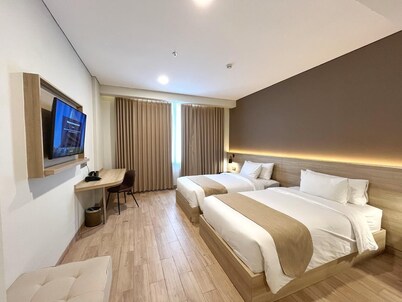
Prime UMY Hotel Convention & Dormitory
Jl. Anggrek Tegalrejo Kasihan Jogja
188 kr
13 okt. – 14 okt.
inklusive skatter och avgifter